
Types of Chemical Reactors Used in Industrial Manufacturing
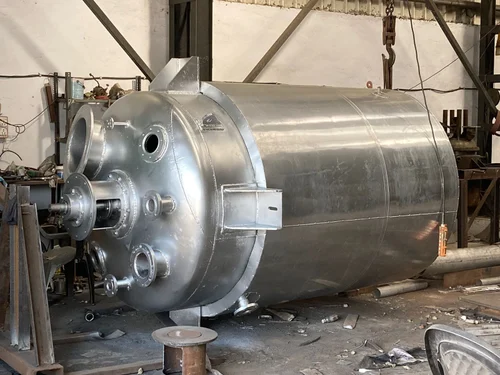
Chemical reactors are the backbone of the chemical industry. They provide the controlled environment where raw materials undergo reactions to form valuable products such as fuels, pharmaceuticals, polymers, and specialty chemicals. Selecting the right reactor type is critical for efficiency, safety, and product quality. In this blog, we will explore the different types of chemical reactors used in industrial manufacturing, their applications, and how engineers decide which reactor fits a particular process.
What Are Chemical Reactors?
A chemical reactor is an item of industrial process equipment designed to contain and control chemical reactions. In chemical engineering, reactor design is a core subject because the type of reactor in chemical industry applications directly affects yield, energy use, and safety. Whether in small lab settings or large-scale plants, reactors serve the same fundamental purpose: to ensure reactions occur efficiently and predictably.
Different Types of Chemical Reactors
There are several reactor types chemical engineering professionals rely on. Each is designed to meet specific process requirements, and each has advantages and limitations.
1. Limpet Coil Reactor
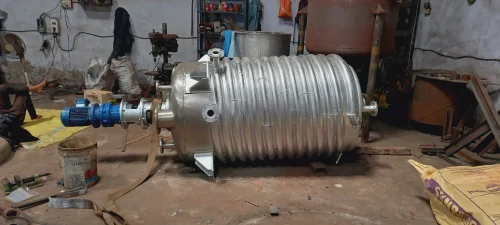
A limpet coil reactor uses an external coil welded to the reactor wall for heating or cooling. It allows precise temperature control and is commonly used in chemical and pharmaceutical manufacturing.
- Advantages: Efficient heat transfer, robust design.
- Disadvantages: Limited surface area compared to jacketed designs.
2. Double Limpet Coil Reactor
This is a more advanced version of the double limpet coil reactor with coils on both sides for enhanced heat transfer.
- Advantages: Improved temperature control, suitable for exothermic reactions.
- Disadvantages: More complex and costly to manufacture.
3. Jacketed Reactor Vessel
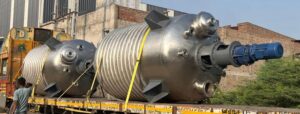
A jacketed reactor vessel has a layer (jacket) around the main vessel through which heating or cooling fluid circulates. This design is widely used in the chemical industry.
- Advantages: Uniform heating and cooling, suitable for various industries.
- Disadvantages: Limited flexibility for extreme thermal conditions.
4. Double Jacketed Reactor
This double jacketed reactor features two jackets for maximum thermal efficiency. It allows multiple fluids for precise temperature management.
- Advantages: Superior thermal control, ideal for sensitive processes.
- Disadvantages: Higher fabrication cost and complexity.
5. Open Reaction Vessel
An open reaction vessel is used for simple mixing or reactions under atmospheric conditions. It does not provide pressure containment.
- Advantages: Simple design, easy to operate and clean.
- Disadvantages: Limited to basic reactions without pressure or vacuum.
6. Resin Plant Reactor

Specially designed for resin production, these reactors manage high-viscosity reactions and polymerization processes.
- Advantages: Built for high-viscosity operations, tailored for resin industries.
- Disadvantages: Less versatile outside resin manufacturing.
7. Chemical Reaction Vessel
This is a general-purpose vessel for carrying out a variety of chemical processes. It can be designed with jackets, coils, or other features depending on the application.
- Advantages: Versatile, customizable.
- Disadvantages: Performance depends on design features.
8. MSRL Reactor
Made from Mild Steel Rubber Lined (MSRL), these reactors are used for highly corrosive chemical reactions. The rubber lining protects the steel from corrosion.
- Advantages: Corrosion resistance, cost-effective for corrosive processes.
- Disadvantages: Rubber lining requires maintenance and periodic replacement.
9. Reaction Vessel
Reaction vessels are general-purpose containers designed to withstand pressure, vacuum, or temperature conditions based on the process.
- Advantages: Customizable for diverse industries, reliable for multiple processes.
- Disadvantages: Cost varies significantly with specifications.
10. Blending Reactor
Blending reactors are designed for homogeneous mixing of liquids or solids. They are common in pharmaceuticals, food, and specialty chemicals.
- Advantages: Ensures uniform mixing, suitable for large-scale blending.
- Disadvantages: Limited use for reactions requiring high pressure or temperature.
Reactor Selection for Industrial Manufacturing
One of the most common questions is: What are the different types of chemical reactors and how do we choose the best reactor type for industrial manufacturing? The answer depends on several factors:
- Reaction Kinetics: How fast the reaction occurs and how it proceeds.
- Heat Transfer Needs: Some reactions generate or consume large amounts of heat.
- Production Scale: Lab-scale, pilot-scale, or full industrial scale.
- Safety Considerations: Reactor operation and safety are critical, especially for hazardous chemicals.
- Economic Factors: Cost of operation, maintenance, and scalability.
For example, resin plant reactors are often chosen for polymer production, while jacketed vessels are used for multi-purpose applications requiring heating and cooling control.
Examples of Chemical Reactors in Industry
- Pharmaceuticals: Blending reactors and jacketed vessels are common for controlled reactions and formulations.
- Petrochemicals: Double limpet coil and jacketed reactors are widely used for large-scale continuous operations.
- Food Industry: Open reaction vessels and blending reactors serve for mixing and fermentation.
- Resin Industry: Resin plant reactors dominate for polymer and resin production.
Advantages and Disadvantages of Different Reactors
Each reactor type brings trade-offs:
- Limpet Coil Reactors: Efficient heat transfer but limited surface area.
- Double Limpet Coil Reactors: Enhanced heat control but higher cost.
- Jacketed Reactors: Uniform heating but less adaptable to extreme conditions.
- Double Jacketed Reactors: Excellent control but expensive.
- Open Reaction Vessels: Simple but limited to non-pressurized operations.
- Resin Plant Reactors: Optimized for resin processes but not versatile.
- MSRL Reactors: Corrosion resistant but lining requires maintenance.
- Blending Reactors: Excellent for mixing but limited for extreme reactions.
This is why reactor selection for chemical processes must consider both engineering performance and operational efficiency.
Future of Modern Reactor Technology
Advances in chemical engineering reactor types are driven by the demand for safer, more sustainable, and more efficient industrial process equipment. Trends include:
- Integration of digital monitoring and automation for real-time control.
- Development of compact modular reactors for flexible production.
- Sustainable reactor designs to minimize energy use and emissions.
- Improved reactor performance and efficiency through advanced materials and coatings.
FAQs
What are the different types of chemical reactors?
The main types include limpet coil reactors, double limpet coil reactors, jacketed vessels, double jacketed reactors, open reaction vessels, resin plant reactors, chemical reaction vessels, MSRL reactors, reaction vessels, and blending reactors.
Which is the best reactor type for industrial manufacturing?
It depends on the process. For heat-sensitive processes, jacketed reactors are preferred. For corrosive reactions, MSRL reactors are a good choice. Resin plant reactors are used for polymerization.
What are the advantages and disadvantages of different reactors?
Each type offers benefits for specific industries but also has limitations such as cost, complexity, or restricted use cases.
What types of reactors are used in pharmaceutical manufacturing?
Blending reactors and jacketed vessels are commonly used due to strict quality requirements and need for flexibility.
How do engineers approach reactor selection for chemical processes?
They evaluate kinetics, heat transfer, safety, economics, and scalability before deciding the right reactor.
Conclusion
Chemical reactors are at the core of industrial manufacturing. At Charmi Engineering, we recognize that from pharmaceuticals to petrochemicals, the choice of reactor influences safety, efficiency, and product quality. Understanding the types of reactors in chemical reaction engineering helps engineers and manufacturers make informed decisions. With modern reactor technology advancing rapidly, the future holds even more efficient, sustainable, and intelligent solutions for chemical manufacturing.